
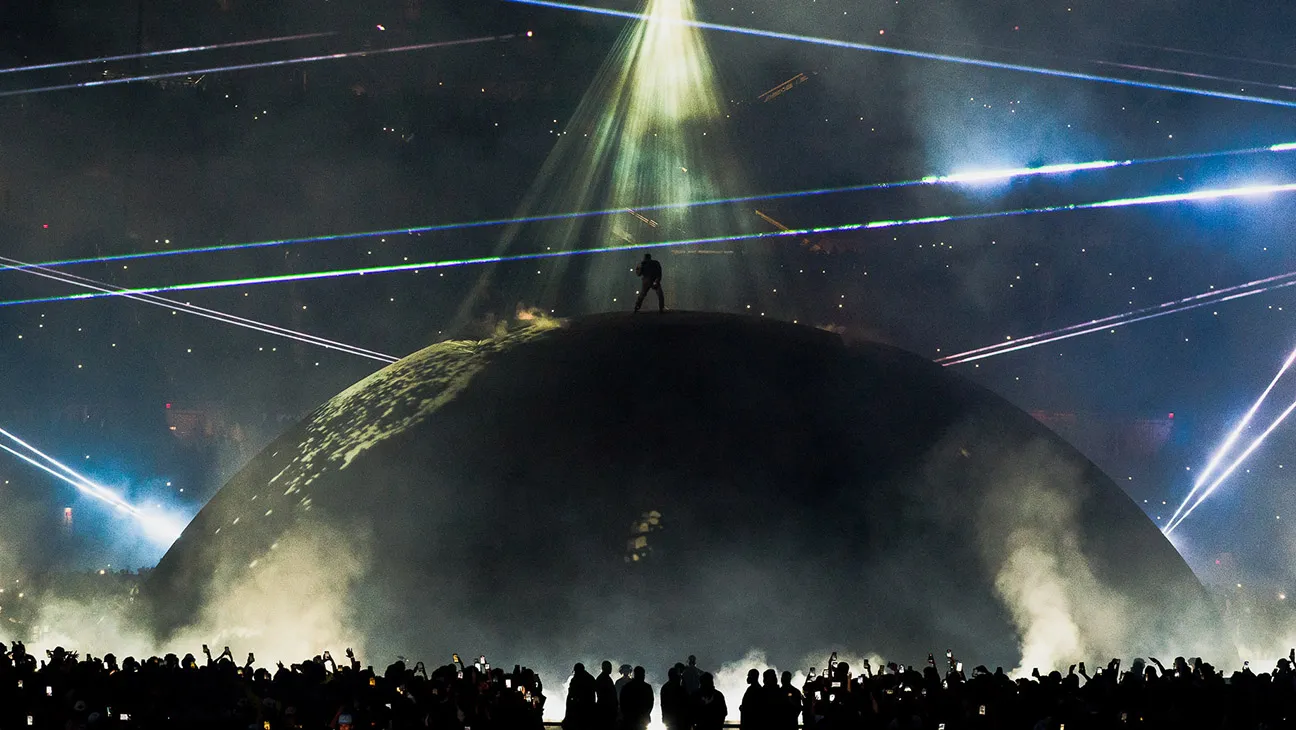
On June 26 — and again on the 28th — Ye, the artist the world spent two decades calling Kanye West, will play Raymond James Stadium. It's his first Tampa show in close to a decade, the tickets are being given away to fans who registered, and it is going to be one of the most-discussed nights the city hosts all year.
It's also complicated in a way a normal stadium booking is not, and pretending otherwise is the lazy move.
Two True Things at Once
Hold both of these, because both are real.
One: he is, by any honest accounting, one of the most influential artists of the century — a catalog that reshaped hip-hop, fashion, and the sound of a generation. For a lot of people, a chance to see that live, for free, in their own city, is a genuine event. They'll separate the art from the artist, and they'll have a defensible reason for doing it.
Two: in recent years Ye made a series of antisemitic statements that were widely and rightly condemned — that cost him partnerships and standing, and that caused real harm to real people. For a lot of others, none of that washes off because the beat is good. They'll see a stadium handing him a platform and a microphone, and they'll have a defensible reason for staying home.
These aren't strawmen. They're your actual neighbors, and both sides are going to be right that the other is missing something.
A Booking Is a Market Signal
Here's the part Tampa specifically has to sit with. A stadium show isn't a moral endorsement — it's a transaction. A promoter ran the numbers. A venue said yes. Free tickets juice demand and headlines. The math probably works, which is exactly why it's happening.
But "the math works" is its own kind of statement. Attention is the most valuable currency there is right now, and a city the size of Tampa choosing to spend a stadium's worth of it on a figure this polarizing is making a choice, whether it frames it that way or not. You can argue the choice is fine — venues host who they host, audiences decide with their feet, and a stage isn't a stamp of approval. You can also argue that "it sold tickets" has never been a complete answer to "should we have."
The Reframe
The interesting question isn't whether Ye should be allowed to play Tampa. He is; he will. It's what each party in the chain is actually deciding — the promoter, the venue, the fan with a free ticket, and the person across town who gives the night their attention just by arguing about it.
Attention isn't free, even when the ticket is. Everyone who shows up, and everyone who argues about who showed up, is paying into the same pot. Tampa doesn't have to agree on whether that's a good use of the city's spotlight. But it's worth being honest that aiming the spotlight is a decision — not a default — and on June 26, a lot of people are going to make it together.